 Reviews

 Proudly American

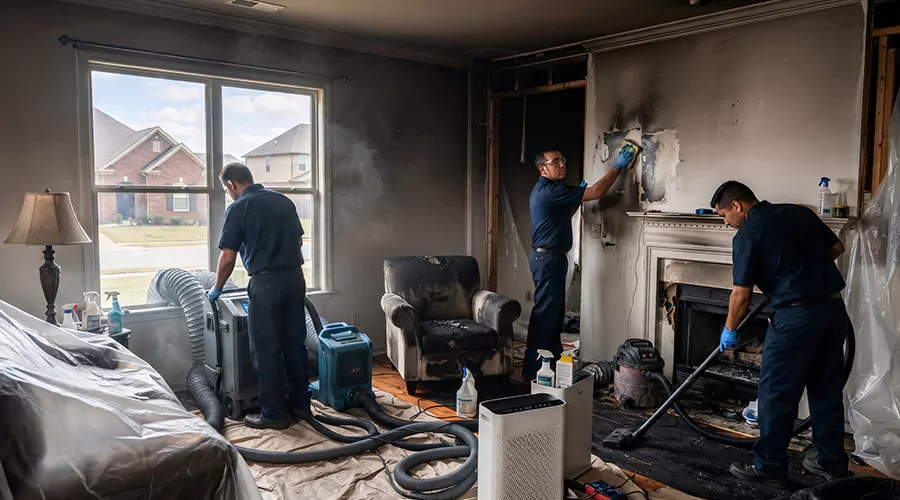
Smoke remediation cost averages about $3,000 in 2026, with most projects ranging from $200 to $12,000 depending on the affected area and severity. A lightly affected room can cost a few hundred dollars. Whole-house treatment after a fire can reach $10,000 or more.
The amount of soot has a major effect on the final price. Persistent odor or contamination inside HVAC ducts can also increase the scope, especially when smoke and water damage restoration is needed after firefighting efforts.
Smoke cleanup is usually much less expensive than complete fire restoration when flames did not damage the structure. The cost rises once burned materials or firefighting water must also be addressed.
What Is the Average Smoke Remediation Cost in 2026?
Smoke remediation averages about $3,000 in 2026. Current national pricing ranges from roughly $200 for minor odor removal to $12,000 for extensive work. A single affected room commonly costs $200 to $1,200 while a whole-house project can move into five figures.
A useful planning range is:
| Damage Level | Typical 2026 Cost |
|---|---|
| Very minor odor issue | $200 to $600 |
| One affected room | $200 to $1,200 |
| Three affected rooms | $600 to $3,600 |
| Five or more rooms | $1,000 to $10,000+ |
| Whole-house remediation | $2,000 to $12,000 |
| Severe project with repairs | Can exceed $12,000 |
Another current cost dataset places an individual room or small affected area around $400 to $1,500. Whole-house work commonly runs $2,000 to $12,000.
The wide range exists because smoke doesn't stay inside the room where a fire started. Fine particles can move through doorways or settle inside materials far from the original source.
What Does Smoke Remediation Include?
Smoke remediation removes residue and odor that remain after smoke exposure. The process can involve surface cleaning followed by deodorization. HVAC cleaning may also be required when particles entered the duct system. Materials that cannot be cleaned may need separate repair or replacement.
A typical project can include:
- Inspection of affected rooms
- Surface residue removal
- Soot clean up
- Cleaning painted surfaces
- Cleaning suitable flooring
- Odor treatment
- HVAC duct cleaning
- Sealing stained surfaces
- Cleaning salvageable contents
- Removing materials that cannot be restored
Smoke damage remediation focuses on contamination left behind by smoke. It does not automatically include rebuilding burned structural components.
That difference matters when comparing prices. An estimate for odor treatment may look much lower than one that also includes drywall replacement.
How Much Do Different Smoke Treatments Cost?
Individual treatments range from about $120 for basic deep cleaning to $1,600 for painting or sealing affected areas. Duct cleaning commonly costs $150 to $800. Deodorization can reach $1,000 while thermal fogging usually costs about $200 to $600.
Typical 2026 treatment costs include:
| Treatment | Typical Cost |
|---|---|
| General deep cleaning | $120 to $300 |
| Deodorizing | $200 to $1,000 |
| HVAC duct cleaning | $150 to $800 |
| Ozone treatment | $200 to $800 |
| Painting or sealing | $400 to $1,600 |
| Thermal fogging | $200 to $600 |
A second national pricing source places HVAC cleaning at about $250 to $1,200. It puts ozone odor treatment around $300 to $700.
Fire smoke odor removal sometimes requires more than one method because odor can remain inside porous materials after visible staining disappears.
Paying for odor treatment without removing its source can also produce disappointing results. Cleaning contaminated material usually comes before deodorization.
What Factors Have the Biggest Effect on the Price?
The extent of contamination has the largest effect on price. A single room needs less labor than a house where smoke entered several rooms. The type of smoke also matters because oily residue can require more cleaning than lighter dry soot.
Major cost factors include:
- Number of affected rooms
- Total contaminated surface area
- Amount of soot
- Type of smoke residue
- Porous materials affected
- HVAC contamination
- Persistent odor
- Required painting
- Material replacement
- Emergency timing
Emergency work can cost about 10% to 15% more when treatment is required outside normal working hours. Weekend or holiday work can fall into this higher range.
Smoke damage cleaning cost can therefore differ greatly between two homes that experienced fires of similar size.
One property may have washable hard surfaces. Another may have smoke inside carpet or insulation.
How Does the Source of Smoke Affect Cost?
Fire smoke usually costs more to remediate than a small cigarette or cooking odor problem because soot can spread widely. House fires can also produce several types of residue at once. Heat damage and firefighting water may create separate repair needs beyond smoke treatment.
Common smoke sources include:
- Cooking fires
- Fireplace smoke
- Electrical fires
- House fires
- Wildfire smoke
- Long-term indoor smoking
Smoke damage from fire can involve both visible black residue and odor trapped below the surface.
Cigarette contamination can be different. Years of indoor smoking may leave residue across ceilings or walls even when no single severe event occurred.
Long-term contamination can still become expensive because the affected area may include almost every room.
How Much Does One-Room Smoke Cleanup Cost?
One-room smoke treatment commonly costs about $200 to $1,200 in 2026. Another current national estimate places small-area treatment around $400 to $1,500. The lower end generally applies to minor odor problems while heavy staining or porous materials move the project higher.
For example, a lightly affected bedroom may need cleaning and deodorizing.
A kitchen fire can cost more because oily residue may reach cabinets or painted ceilings.
Smoke damage cleaning becomes more expensive when treatment must continue into adjoining rooms even though they show no direct fire damage.
The room count is therefore a starting point rather than a complete measure of contamination.
How Much Does Whole-House Smoke Remediation Cost?
Whole-house remediation generally costs about $2,000 to $12,000 in 2026. Larger homes can cost more when smoke reaches several types of material. HVAC contamination can also expand the affected area because ductwork connects rooms that may otherwise appear untouched.
A whole-house project may include:
- Cleaning walls in multiple rooms
- Treating ceilings
- Cleaning flooring
- Deodorizing contents
- Cleaning ductwork
- Sealing persistent stains
- Treating porous surfaces
Smoke restoration cost grows when the work requires several treatment methods.
A five-room project can run about $1,000 to $10,000 or more depending on severity. Heavy fire-related contamination can exceed that figure.
A larger house doesn't always cost more than a smaller one. A 2,500-square-foot house with limited smoke exposure may cost less than a 1,500-square-foot home with heavy contamination throughout.
How Much Does Soot Removal Add?
Heavy soot cleaning can add about $2,000 to $6,000 to a smoke restoration project in 2026. Soot increases labor because loose particles must be removed without spreading them into clean areas. Some residues can also stain painted surfaces after remaining in place.
Soot damage can affect:
- Ceilings
- Painted walls
- Cabinets
- Flooring
- Upholstery
- HVAC registers
Soot removal services may cost more when deposits cover several rooms instead of one localized area.
The type of residue matters too. Dry powdery soot can behave differently from oily residue produced by some low-temperature fires.
Cleaning method should therefore match the residue rather than relying on one product throughout the house.
How Much Does HVAC Smoke Cleaning Cost?
HVAC duct cleaning generally costs about $150 to $800 in 2026. Another national dataset reports a broader $250 to $1,200 range. The price depends on system size and how much contamination entered the ductwork.
HVAC contamination deserves attention when:
- Soot appears around supply vents.
- Smoke odor returns when the system runs.
- Several distant rooms smell smoky.
- Filters contain dark residue.
- Smoke traveled through return-air pathways.
The HVAC system can distribute particles throughout a property when it operates during or shortly after a smoke event.
Cleaning visible walls while leaving contaminated ductwork untouched can therefore allow odor to return.
How Does Smoke Damage Repair Change the Total?
Repair costs begin when smoke has damaged materials beyond what cleaning can correct. Painting or sealing can cost roughly $400 to $1,600. Drywall replacement or flooring work can raise the total further when contaminated materials cannot remain.
Smoke damage repair may include:
- Repainting stained walls
- Replacing damaged drywall
- Replacing insulation
- Repairing flooring
- Replacing heavily contaminated carpet
- Repairing HVAC components
Smoke damage restoration cost should be separated from structural fire repair when reviewing a large estimate.
A smoke-only project may cost a few thousand dollars. Complete fire and smoke damage restoration can cost much more because burned materials must also be rebuilt.
Current 2026 data places broad fire restoration projects between about $3,083 and $52,031.
What Warning Signs Suggest the Cost Will Be Higher?
Higher costs are likely when smoke has traveled beyond exposed surfaces into porous materials or mechanical systems. Persistent odor is another sign that the affected area may be larger than it appears. Multiple rooms with visible residue can quickly turn a small cleanup into a larger project.
Watch for these signs:
- Soot appears in several rooms.
- Smoke odor returns after ventilation.
- HVAC vents contain dark residue.
- Ceiling stains cover large areas.
- Cabinets smell smoky inside.
- Upholstery retains odor after cleaning.
- Carpet smells worse when the room is closed.
- Wall stains return after washing.
- Insulation was exposed to smoke.
- Firefighting water damaged nearby materials.
Smoke damage on walls can sometimes be corrected with cleaning followed by suitable sealing.
Persistent odor behind the wall creates a different problem because treatment may need to reach concealed material.
Can You Estimate the Scope Yourself?
You can create a basic scope by checking how many rooms contain visible soot or persistent odor. Keep the inspection visual and avoid disturbing heavy ash. Record each affected room separately before comparing the condition of hard surfaces with porous materials.
Use this simple check:
- Close the home for a short period when it is safe.
- Enter each unaffected room first.
- Record where smoke odor is noticeable.
- Check walls for visible residue.
- Look around HVAC registers.
- Note porous materials that retain odor.
- Photograph each affected area.
A house that smells acceptable with every window open can reveal lingering contamination after remaining closed.
Smoke damage smell removal becomes more involved when odor returns after ordinary surface cleaning.
This check won't identify contamination inside walls. It can help show whether the problem is limited to one room or has spread much farther.
When Should You Call a Professional?
Professional assessment is appropriate when heavy soot covers several rooms or smoke has entered the HVAC system. Persistent odor after cleaning can also point to contamination inside porous materials. Fire-related structural damage or electrical problems require separate evaluation before normal cleanup continues.
Consider professional help when:
- Heavy soot covers large areas.
- HVAC ducts contain residue.
- Odor returns after repeated cleaning.
- Several rooms are affected.
- Insulation smells strongly of smoke.
- Firefighting water entered walls.
- Electrical equipment was exposed.
- Structural materials were burned.
- Contents need specialized cleaning.
- The source of odor remains unclear.
A smoke remediation specialist can determine which materials can be cleaned and which need removal.
The scope should list each treatment separately. That makes it easier to compare deodorization or cleaning charges without confusing them with later reconstruction.
Does Homeowners Insurance Cover Smoke Remediation?
Homeowners insurance often covers smoke damage when it comes from a covered accidental fire. Coverage still depends on the policy terms and deductible. Damage from long-term indoor smoking usually isn't treated the same way as sudden fire-related smoke contamination.
Before discarding fire-damaged belongings, document the condition with photographs when it is safe to do so.
Keep records of:
- Damaged rooms
- Affected belongings
- Cleaning costs
- Temporary expenses
- Repair estimates
- Material replacement
Insurance coverage can also distinguish between cleaning an existing surface and upgrading it during later repairs.
Reviewing the policy scope before major replacement work can reduce disagreements about what portion of the project is covered.
How Can You Keep Smoke Cleanup Costs From Rising?
Early containment can limit how far residue spreads after a fire. Avoid carrying soot-covered items through clean rooms. HVAC equipment should also remain off when heavy loose contamination could spread through the system until the situation has been assessed.
Helpful steps include:
- Keep people out of heavily affected rooms.
- Avoid rubbing loose soot into walls.
- Separate clean contents from smoky items.
- Document damage before cleaning.
- Avoid repainting over untreated residue.
- Address wet materials promptly.
- Replace dirty HVAC filters when appropriate.
- Keep heavily contaminated items isolated.
Smoke cleaning should remove the residue source before odor treatment begins.
Covering odor with fragrance can create another expense later if the underlying contamination remains.
The lowest initial treatment isn't always the least expensive option. Repeating incomplete deodorization several times can cost more than addressing the actual source once.
Conclusion
Smoke remediation cost averages about $3,000 in 2026, although individual projects range from roughly $200 to $12,000. One-room problems stay near the lower end while whole-house soot or HVAC contamination raises the price. Repair costs can increase the total again when materials need replacement. If heavy residue affects several rooms, a professional assessment can clarify the scope before repairs begin.
Frequently Asked Questions
How much does it cost to remove smoke smell from one room?
One-room smoke remediation commonly costs about $200 to $1,200. Heavy staining or porous materials can increase the price.
How much does cigarette smoke remediation cost?
Whole-house cigarette smoke treatment commonly costs about $2,000 to $8,000. The price depends on how long smoking occurred indoors and how many materials absorbed residue.
Is thermal fogging expensive?
Thermal fogging commonly costs about $200 to $600. It may be one part of a larger odor-treatment plan rather than the only cleaning step.
Does smoke remediation include repainting?
Not always. Painting and sealing may be priced separately at roughly $400 to $1,600 depending on the affected area.
How long does smoke remediation take?
A minor project may take about one day while extensive contamination can take much longer. Whole-house fire damage can extend the process substantially when repair work is included.
Can smoke damage be completely removed?
Many surfaces can be cleaned successfully. Materials with deep odor penetration may need sealing or replacement when cleaning alone cannot remove the contamination.